
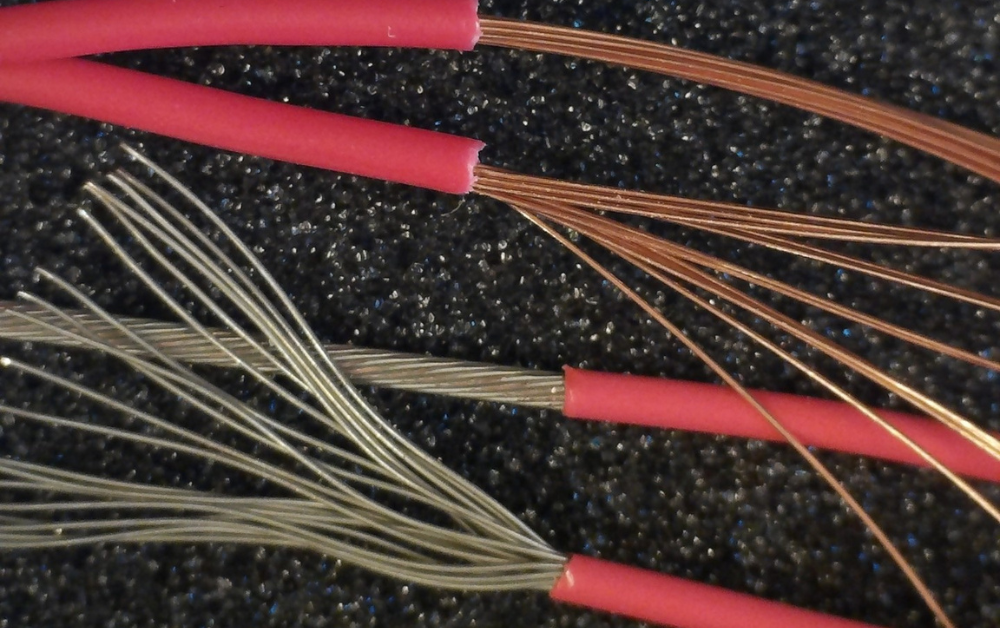
Common automotive wire typically consists of non-plated copper strands. This plain copper conductor works well when the product is new, but the performance of the wire can deteriorate over its lifetime. Areas around crimped contacts are often worst affected as these areas can experience ohmic heating due to current and frequently experience greater exposure to the elements. Unsealed contacts can also suffer electrolytic effects between pins, and this accelerates oxidation, sometimes, the dreaded green oxidation can be observed, and if this gets into the crimp, it can significantly increase the conduction losses through the crimp.
Aerospace wires such as the Type 44 and Type 55 families are supplied with various strand platings principally designed to inhibit corrosion of the conductor strands.
Common plating options are Tin, Nickel and Silver. It is interesting to note that any improvements in cable resistance from the plating alone are minimal. Still, the plating reduces corrosion effects and maintains good strand-to-strand conduction, enabling the cable to evenly distribute current throughout all strands and lead to a more consistent resistance of the cable during its lifetime.
Tin
Is the most cost-effective plating and is an excellent choice for most applications, Silver offers a performance increase but at a significant increase in cost per meter and it is always worth assessing if the gains of silver plate are needed and justify the expense. Especially when you consider a main chassis loom may use many hundreds of meters of wire.
Nickle
Despite having excellent corrosion performance, it is more involved to work with, being next to impossible to solder too, crimping to Nickle wires is effective but compatibility with the crimp system should be checked. Unless it is a very high-temperature application, such as heating elements, the gains of Nickel are usually outweighed by issues in working with it.
Plain wire, Tin and Silver are all suitable for both crimp and solder-type connections. The plating types can generally be mixed within a single splice and most plating types are considered highly compatible with each other.
What is the corrosion resistance of plating?
Plain Copper = Poor
Tin = Good
Silver = Good (Long term high humidity can cause issues)
Nickel = Excellent
What is the maximum working temperature of the plating?
Plain Copper = N/A
Tin = 150C
Silver = 200C
Nickel = 260C
What is the suitability of plating to solder processes?
Plain Copper = Fair (OK when clean but quickly degrades, needs flux)
Tin = Good
Silver = Excellent
Nickel = Very Poor (High temps and special flux required)
What is the suitability of plating to crimp processes?
Plain Copper = Fair (oxidation often occurs in crimps over time)
Tin = Good
Silver = Good
Nickel = Excellent